
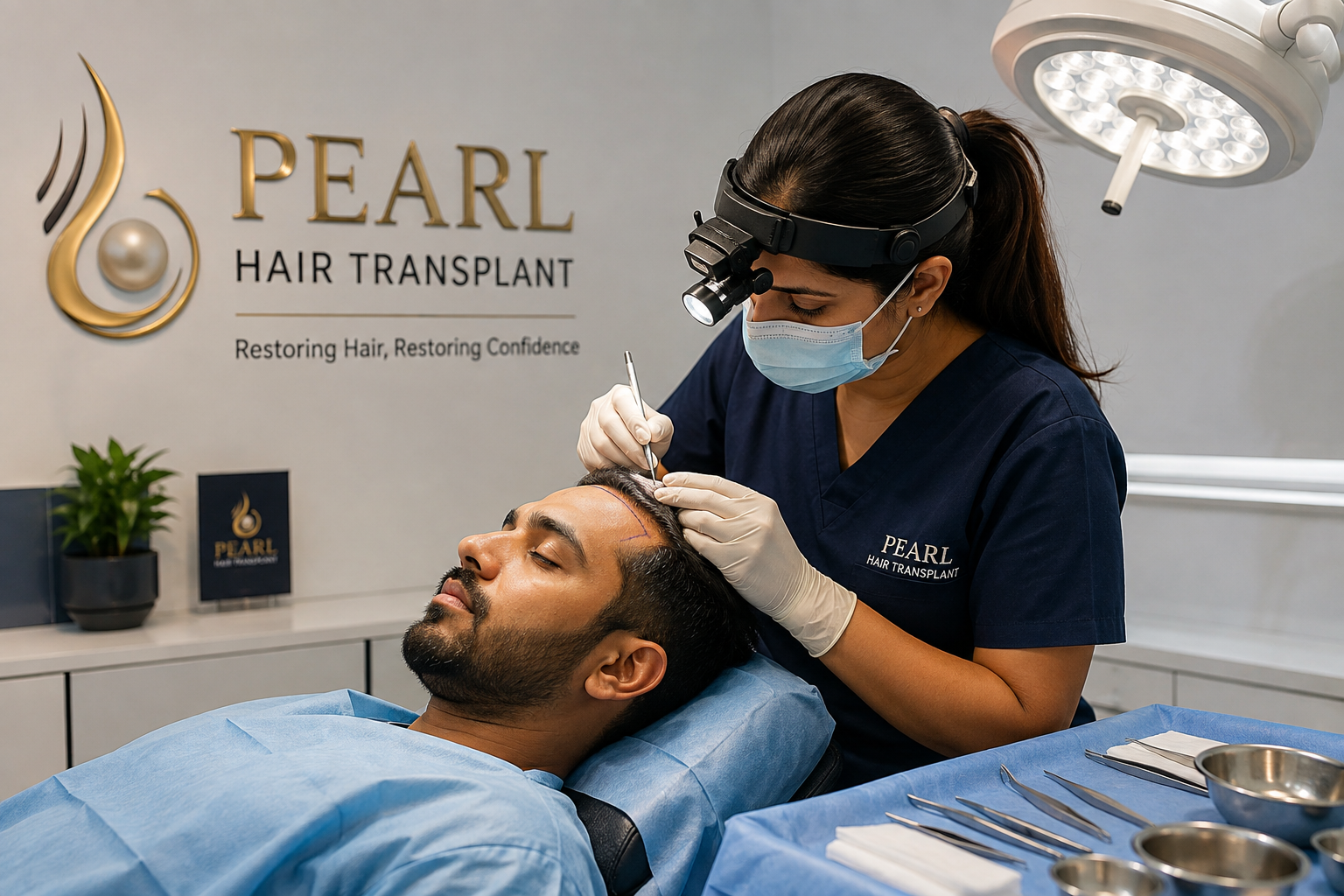
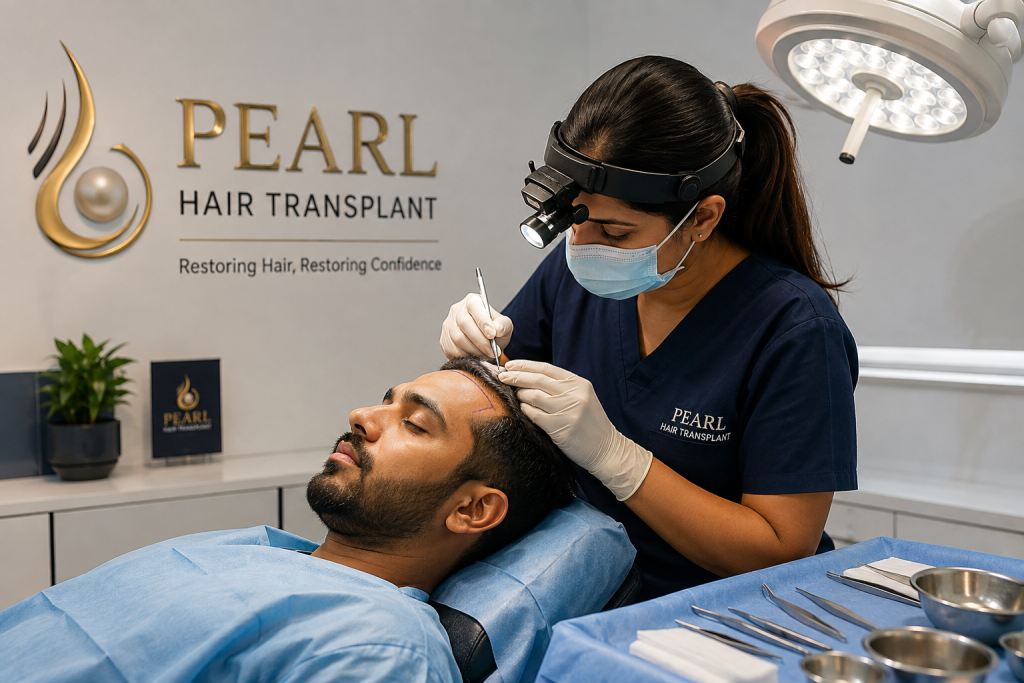
There is a moment that many men experience at some point in their lives. You are scrolling through old photographs on your phone, and suddenly you pause. The picture is from a few years ago a wedding, a birthday, a casual weekend trip. Your smile is the same, but something about your appearance feels different. You look closer, and then it hits you: your hairline was noticeably fuller back then. The temples have since crept backward, and the hair on top does not have the density it once did.
That question can feel heavy. It can also feel like the first real step toward understanding what is happening and what can actually help. For many men in Odisha, researching a hair transplant in Cuttack is not about chasing perfection it is about feeling more like themselves again. This guide is designed to walk you through everything you need to know, from how the procedure works to what recovery really looks like, so you can make an informed decision.
What Is a Hair Transplant?
A hair transplant is a medical procedure that moves healthy hair follicles from one part of the body to another. In simple terms, hair follicles that are genetically resistant to balding are taken from a donor area usually the back and sides of the scalp and carefully placed into the recipient area where hair has become thin or absent.
These transplanted follicles are your own living tissue. Because they come from a zone that is naturally programmed to retain hair over a lifetime, they continue to grow even after being relocated. The procedure does not create new hair; instead, it redistributes existing, healthy follicles to areas that need better coverage.
Hair transplantation is a medical procedure, not a cosmetic product. Suitability depends on several individual factors, and the decision to proceed should always be based on a professional assessment rather than online information alone.
Why Are Men Losing Hair?
Before exploring solutions, it helps to understand why hair loss happens in the first place. Not every type of hair thinning requires transplantation, and knowing the cause can guide the right treatment path.
The most common reason is androgenetic alopecia, often called male pattern hair loss. This condition is driven by a combination of genetics and the hormone dihydrotestosterone (DHT). If hair loss runs in your family, you are more likely to experience it yourself. In these cases, follicles on the top and front of the scalp gradually shrink over time, producing thinner and shorter hairs until they eventually stop growing altogether.
Other contributing factors can include:
- Hormonal changes: Shifts in hormone levels can trigger temporary or progressive shedding.
- Age: Hair density naturally decreases for many men as they get older.
- Medical conditions: Thyroid disorders, autoimmune diseases, and scalp infections can cause patchy or diffuse hair loss.
- Nutritional deficiencies: Low levels of iron, protein, or certain vitamins can weaken hair growth.
- Stress and lifestyle factors: Physical or emotional stress can temporarily accelerate shedding.
A proper diagnosis is essential. Treating hair loss without understanding the root cause can lead to disappointment. This is why a clinical evaluation should always precede any treatment decision.
Is Hair Transplant in Cuttack Right for You?
Two people can walk into the same clinic with similar-looking bald spots and still require completely different treatment plans. Hair transplantation is not automatically suitable for everyone, and candidacy depends on a range of individual factors.
During a consultation, a doctor will typically consider:
- Pattern and stage of hair loss: The distribution of thinning matters. Some patterns respond better to transplantation than others.
- Donor hair availability: You need sufficient healthy follicles in the donor area to achieve meaningful coverage. If the donor zone itself is thinning, transplantation may not be viable.
- Scalp condition: The health and laxity of the scalp affect how well it can receive grafts.
- Age: Hair loss can be progressive. Operating too early, before the pattern stabilizes, may lead to unnatural results as further loss occurs around the transplanted area.
- Overall health: Certain medical conditions can affect healing and surgical outcomes.
- Future hair-loss pattern: A good treatment plan anticipates how hair loss might progress over the next decade and plans the graft placement accordingly.
This is why a professional consultation matters. It transforms a general question “Will a transplant work for me?” into a specific, personalized answer.
What Is FUE Hair Transplant?
FUE stands for Follicular Unit Extraction. It is one of the most commonly performed modern hair restoration techniques and has largely replaced older strip-surgery methods.
In FUE, individual follicular units naturally occurring groups of one to four hairs—are extracted one at a time from the donor area using a micro-surgical punch tool. These follicles are then prepared and implanted into tiny recipient sites created in the thinning or balding areas.
The key advantage of FUE is that it leaves no linear scar on the back of the scalp. Instead, the donor area heals with tiny, nearly invisible dot-like marks that are easily concealed even with short hair. The procedure is performed under local anesthesia, which means you remain awake and comfortable throughout.
An FUE hair transplant in Cuttack can be suitable for many men, but candidacy still depends on donor density, scalp characteristics, and treatment goals. No single technique is appropriate for every patient.
If you are exploring different approaches to hair restoration, you may find it useful to learn more about Hair Transplantation and how it compares with non-surgical options like PRP Therapy for early stage thinning.
How Does a Hair Transplant Procedure Work?
Understanding the steps involved can make the process feel less intimidating. Here is a general overview of how a hair transplant procedure typically unfolds.
Step 1: Consultation and Hair Loss Assessment
The doctor examines your scalp, evaluates your hair-loss pattern, and checks the donor area density. Your medical history and treatment goals are discussed openly.
Step 2: Treatment Planning
Based on the assessment, the doctor creates an individualized treatment plan. This includes the estimated number of grafts, the areas to be covered, and the expected density outcome.
Step 3: Hairline Design
This is one of the most artistic parts of the process. The doctor marks the planned hairline while you are sitting upright, taking into account your facial proportions, age, and natural hair-growth direction.
Step 4: Donor Follicle Extraction
Under local anesthesia, individual follicular units are gently extracted from the donor area using fine micro-surgical instruments.
Step 5: Graft Preparation
The extracted follicles are carefully cleaned, sorted, and stored in a special holding solution to keep them healthy before implantation.
Step 6: Implantation
The doctor creates tiny recipient incisions at the correct angle, depth, and direction. The prepared grafts are then placed into these sites, following the natural growth pattern that was designed earlier.
Step 7: Aftercare Instructions
Once the procedure is complete, the medical team provides detailed post-procedure instructions covering scalp care, sleeping position, activities to avoid, and follow-up visits. Following these instructions closely supports proper healing.
For those dealing with early thinning rather than advanced baldness, the clinic also offers Advanced GFC Sessions which may complement the overall treatment approach.
Why Is Hairline Design So Important?
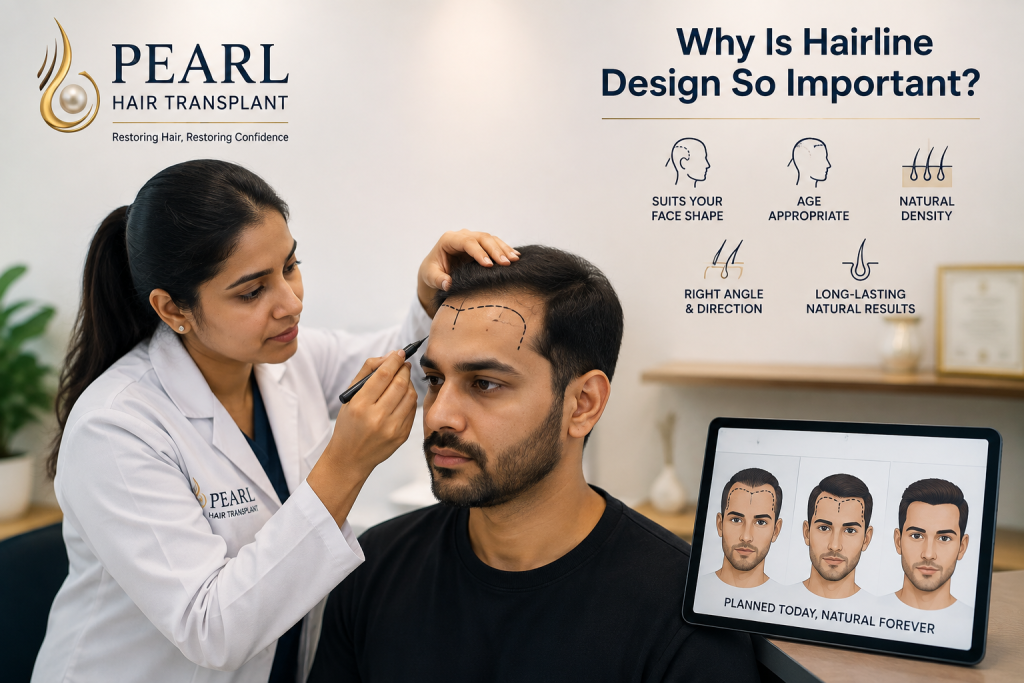
A hair transplant is not simply about adding as many hairs as possible. It is about creating a frame for the face that looks appropriate and natural.
Hairline design is where medical precision meets artistry. The hairline must respect the person’s age, facial structure, and existing hair density. An overly straight or unnaturally low hairline can look out of place, especially as a man ages. Similarly, grafts placed at incorrect angles will not lie flat and can create an unnatural appearance.
A well-designed hairline:
- Follows the natural contour of the frontal scalp
- Includes subtle irregularities that mimic natural growth
- Accounts for the direction of hair flow
- Leaves room for age-appropriate recession
- Blends seamlessly with existing native hair
This is not a template that can be copied from one patient to another. It requires individual observation, planning, and a clear understanding of what will look natural on your specific face. A precise Hair Loss Diagnosis helps determine the pattern and guide this planning process.
What Is Hair Transplant Recovery Like?
Recovery is a common concern, and understanding what to expect can reduce anxiety.
In the first few days after the procedure, you may experience some mild redness, slight swelling around the forehead, and tiny scabs around each transplanted follicle. This is a normal part of the healing process and typically resolves within a week to ten days. The donor area may feel slightly tender, similar to a mild sunburn.
You will be advised to sleep with your head slightly elevated and to avoid touching, scratching, or rubbing the recipient area. Most people return to non-strenuous daily activities within a few days, though exercise and heavy lifting should be paused for the period specified by your doctor.
Recovery varies from person to person. The right approach is to follow the individualized aftercare instructions provided by your clinic rather than comparing your timeline with someone else’s experience.
When Do Hair Transplant Results Start Appearing?
Hair transplantation is not an instant transformation. The journey unfolds gradually, and understanding the natural timeline helps set realistic expectations.
In the weeks following the procedure, the transplanted hairs will likely shed. This is called shock loss, and it is a completely expected temporary phase. The follicles are not lost only the hair shafts have fallen out. The roots remain alive beneath the scalp and will enter a new growth cycle in time.
Over the following months, new hair begins to emerge. The growth is not uniform at first; some follicles wake up earlier than others. Density improves progressively, and the hair shafts thicken and mature over time. The final appearance is typically assessed after a year or more, once the hair has fully matured and integrated with the surrounding native hair.
Every individual’s biological response is different. Patience is an essential part of the process.
Do Hair Transplants Look Natural?
Yes, a well-performed hair transplant can look entirely natural. The key is in the details.
A natural-looking result depends on several factors:
- Hairline design: An age-appropriate, irregular, and feathered hairline
- Graft placement angle: Matching the natural exit angle of native hair
- Direction of growth: Following the whorls and flow patterns of the scalp
- Donor hair quality: Texture, caliber, and color match with the recipient area
- Density planning: Creating a gradient of density rather than a solid block of hair
- Individual characteristics: Respecting the unique features of each person’s scalp and face
The objective should always be to recreate a natural-looking pattern that does not draw attention to itself. When someone looks at you, they should notice your face—not your hairline.
How Much Does a Hair Transplant Cost in Cuttack?
The hair transplant cost in Cuttack is not a single fixed price. It varies from person to person because each case presents unique requirements.
Several factors influence the overall cost:
- The extent and pattern of hair loss
- The total number of grafts required for adequate coverage
- The availability and quality of donor hair
- The technique used (FUE and its variations)
- The complexity of the hairline design
- The duration and number of sessions needed
- Individual clinical requirements and aftercare support
Because these variables differ for every patient, an accurate estimate can only be provided after an in-person consultation and scalp assessment. Cost should be one part of a broader decision-making process rather than the sole deciding factor.
What Should You Look for in a Hair Transplant Clinic in Cuttack?
Choosing where to have a hair transplant is a significant decision. Here are some practical factors to consider when evaluating a hair transplant clinic in Cuttack:
- Qualified medical professionals: The procedure should be performed or directly supervised by a trained doctor.
- Thorough consultation: The clinic should invest time in understanding your hair loss, not just rushing to book a procedure.
- Individualized treatment planning: Your treatment plan should be designed for you, not taken from a standard template.
- Clear explanation of the procedure: You should understand what will happen at every step.
- Appropriate hairline design: The clinic should demonstrate how they plan your hairline.
- Proper donor-area assessment: Donor density and scalp condition should be evaluated carefully.
- Transparent communication: Risks, recovery, and realistic expectations should be discussed openly.
- Aftercare support: The clinic should provide follow-up care and be available for your questions.
For any clinic you consider, you can always Contact Pearl Hair Transplant to understand their approach and ask questions before making your decision.
Why Consultation Matters Before a Hair Transplant
Reading about hair transplants online can help you understand the basics. But it cannot replace a one-on-one medical assessment.
Your scalp, your hair-loss pattern, your donor density, and your treatment goals are entirely unique to you. A photograph or an online forum discussion cannot determine whether you are a suitable candidate, how many grafts you might need, or what results you can realistically expect.
During a consultation, the doctor can examine your scalp under magnification, discuss your family history, map your current hair-loss pattern, and talk through what is achievable. This conversation gives you the clarity you need to make a confident decision.
At Pearl Hair Transplant, patients can discuss their hair-loss concerns and treatment goals with Dr. Chinmayee Kar as part of the consultation and treatment-planning process. This step is designed to provide individualized attention and realistic guidance before any treatment decision is made.
Frequently Asked Questions About Hair Transplant in Cuttack
1. What is a hair transplant?
A hair transplant is a medical procedure in which healthy hair follicles are taken from a donor area and placed into areas affected by thinning or baldness. The transplanted hair continues to grow naturally over time.
2. Is FUE hair transplant painful?
The procedure is performed under local anesthesia, which numbs the scalp. Patients typically remain comfortable during the extraction and implantation. Some mild post-procedure discomfort can occur and is usually manageable with prescribed medication.
3. How long does a hair transplant procedure take?
The duration depends on the number of grafts being transplanted and the complexity of the case. It can range from several hours to a full day.
4. How long does hair transplant recovery take?
Initial healing of the tiny recipient sites usually occurs within a week to ten days. Full recovery and the return to all normal activities depend on individual healing and should follow the doctor’s specific aftercare timeline.
5. When will transplanted hair start growing?
Transplanted hairs often shed within the first few weeks. New growth typically begins gradually after a resting phase and continues to improve in density and thickness over many months.
6. How much does a hair transplant cost in Cuttack?
The cost varies depending on the number of grafts needed, the technique used, and individual treatment requirements. An accurate quote is provided only after a personal consultation and assessment.
7. Can everyone undergo a hair transplant?
Not everyone is a suitable candidate. Factors such as donor hair availability, hair-loss stability, overall health, and realistic expectations all play a role in determining candidacy.
8. Is a consultation necessary before a hair transplant?
Yes. A professional consultation allows the doctor to evaluate your scalp, diagnose the cause of hair loss, and create an individualized treatment plan before any procedure is scheduled.
Conclusion
Let us return to that moment in front of the mirror. The man who once stood there wondering if anything could be done now understands that a hair transplant is not simply about getting more hair. It is about understanding why the loss happened, evaluating what donor hair is available, designing a hairline that looks appropriate, and approaching treatment with realistic expectations.
Not every type of hair loss requires transplantation. Not every person is a suitable candidate. But for those who are, the journey begins with knowledge and a professional conversation, not with a rushed decision.
If you are considering a hair transplant in Cuttack, the first step does not have to be deciding on a procedure. It can simply be having a professional conversation about your hair loss and understanding what options may be suitable for you.
Ready to Discuss Your Hair Restoration Options?
If you are experiencing hair thinning, a receding hairline, or baldness and are considering a hair transplant in Cuttack, schedule a consultation to understand your available options.
Dr. Chinmayee Kar
Pearl Hair Transplant
Clinic Address:
Pearl Hair Transplant
C446, Eye Hospital Road,
Above Urban Cooperative Bank,
CDA Sector VI,
Cuttack, Odisha – 753014
Phone: +91 70088 01645
Disclaimer: This content is for informational and educational purposes only and is not a substitute for professional medical advice, diagnosis, or treatment. Individual results may vary. Always seek the advice of a qualified health professional regarding a medical condition or treatment plan.
