
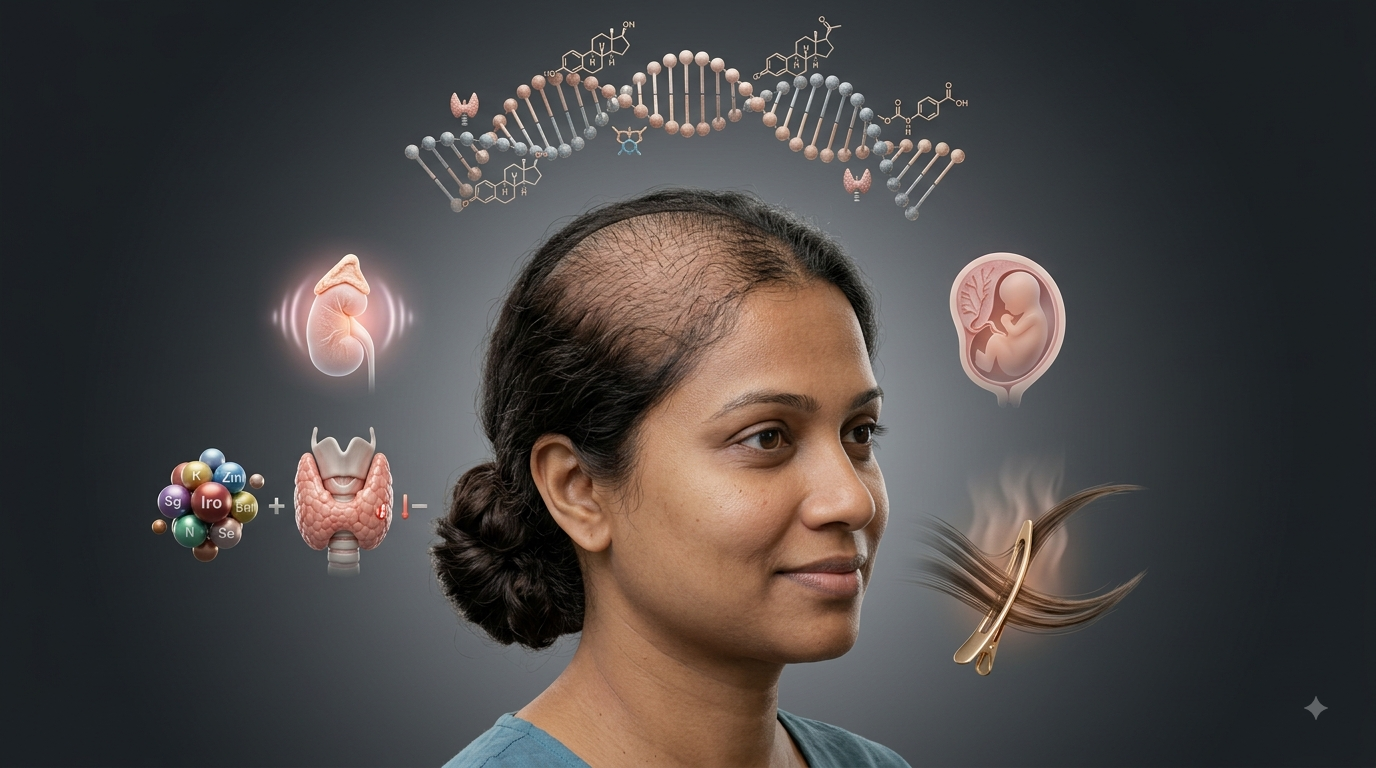
For many women, noticing extra hair in the comb or a widening parting can be a worrying experience. While losing some hair daily is a normal part of the hair growth cycle, significant thinning or excessive shedding often points to an underlying issue that needs attention.
If you are noticing persistent changes, you are not alone. Hair loss in women is more common than often realized, and understanding the “why” is the first step towards finding a solution. This article breaks down the common causes, signs to look for, and the range of treatments available, helping you make informed decisions about your hair health. For those seeking the best hair loss treatment in Cuttack, it’s essential to understand that effective solutions begin with accurate diagnosis.
Is Hair Loss in Women Normal?
It is completely normal to shed between 50 and 100 hairs a day as part of the natural hair cycle . This shedding happens when old hairs fall out to make room for new growth. However, it becomes a concern when you notice a significant increase in shedding or a visible decrease in volume that doesn’t seem to be growing back.
The key difference lies in the pattern. Temporary shedding often occurs a few months after a stressful event or illness, whereas progressive thinning happens gradually over time and is often linked to genetics or hormonal shifts.
Common Causes of Hair Loss in Women
The reasons for hair loss in women are diverse. Rather than assuming a single cause, it’s important to look at the whole picture. Here are the most common triggers:
Hormonal Changes
Fluctuations in hormones are a major factor. Hair loss after pregnancy is common due to a sudden drop in estrogen levels. Similarly, the hormonal shifts during menopause can lead to thinning .
Genetics and Medical Conditions
Female pattern hair loss (androgenetic alopecia) is the most common type of hair loss in women . It is often hereditary and leads to a gradual widening of the parting . Additionally, conditions like PCOS, thyroid disorders, and autoimmune diseases can cause shedding .
Lifestyle and Nutritional Deficiencies
A lack of essential nutrients like iron, Vitamin D, or B12 can affect hair growth . Stress, rapid weight loss, and crash dieting can also trigger a condition called telogen effluvium, where hair sheds excessively .
Styling Habits
Consistently wearing tight hairstyles (like ponytails or buns) pulls on the hair roots, leading to traction alopecia. Excessive use of heat tools and chemical treatments can also weaken the hair shaft, leading to breakage .
Symptoms of Hair Loss in Women
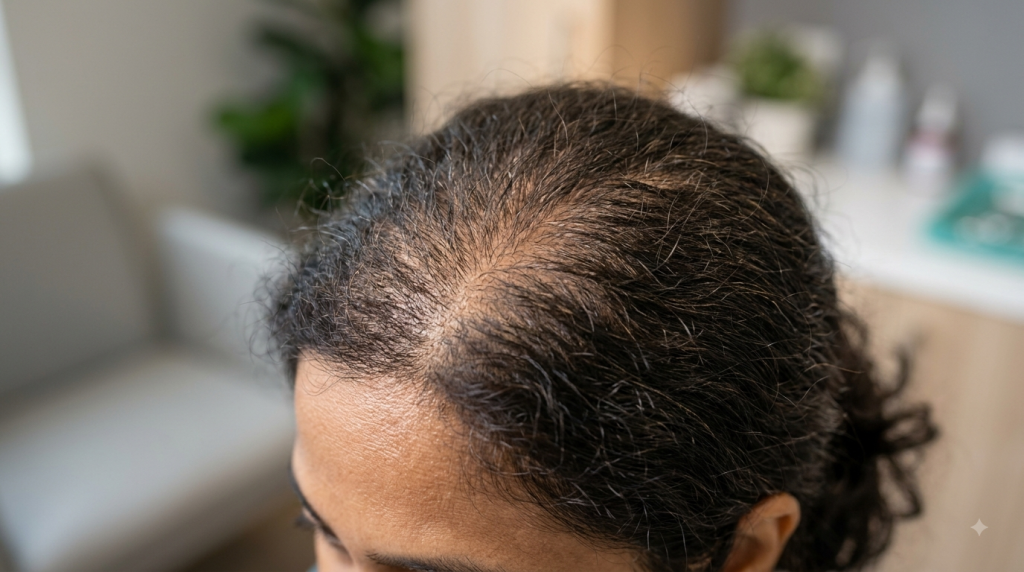
Recognizing the early signs can help you seek help sooner. Look out for:
- Wider hair parting: This is often the first noticeable sign, particularly in female pattern baldness .
- Visible scalp: Seeing more of your scalp than usual, especially on the crown.
- Thinner ponytail: Your hair feels significantly less voluminous or you have to wrap the hair tie more times.
- Increased shedding: Finding large amounts of hair on your pillow, in the shower drain, or on your brush.
- Broken hairs: Hair that breaks off mid-length often indicates damage rather than shedding from the root .
- Scalp changes: Itching, redness, or flaking .
Types of Hair Loss Commonly Seen in Women
To understand your condition better, it helps to know the specific terms doctors use:
- Female Pattern Hair Loss (Androgenetic Alopecia): A gradual thinning over the top of the scalp and crown, usually with a widening parting.
- Telogen Effluvium: A temporary condition where hair sheds excessively due to stress, illness, or a sudden hormonal change .
- Alopecia Areata: An autoimmune condition causing patchy hair loss .
- Traction Alopecia: Hair loss caused by constant pulling or tension on the hair roots.
How Is Hair Loss in Women Diagnosed?
Diagnosing hair loss properly is crucial for choosing the right treatment. A qualified dermatologist or hair specialist in Cuttack will typically:
- Review Medical History: Discuss your family history, recent illnesses, stress levels, and medication use .
- Examine the Scalp: A trained doctor will examine the pattern of your hair loss and the condition of your scalp using a dermatoscope .
- Recommend Tests: They may suggest blood tests to check for iron deficiency, thyroid imbalances, or other hormonal issues .
At Pearl Hair Transplant, our approach is rooted in science. We don’t prescribe one-size-fits-all solutions. We focus on identifying the root cause of your hair loss before we recommend any treatment plan.
Treatment Options for Hair Loss in Women
There is no single “cure” for hair loss, but many effective treatments can manage it. The best option depends entirely on the underlying cause.
Nutritional and Lifestyle Adjustments
If deficiencies are found, supplements for iron, Vitamin D, or B12 may be advised. Eating a balanced diet and managing stress can support overall hair health.
Medical Therapies
- Topical Treatments: Minoxidil is a clinically proven topical solution that can slow hair loss and stimulate regrowth in some women .
- Medications: In certain cases, doctors might prescribe anti-androgen medications (like Spironolactone) to treat hormonal imbalances .
Advanced Regenerative Procedures
For suitable candidates, treatments like PRP (Platelet-Rich Plasma) and GFC (Growth Factor Concentrate) are becoming popular. These therapies involve using your body’s own healing properties (growth factors derived from blood) to stimulate hair follicles and promote thickening .
Hair Restoration
For women who do not respond to medical treatments or have advanced hair loss, a hair transplant may be an option. This is generally more suitable for specific types of hair loss rather than diffuse thinning .
When Should You See a Doctor for Hair Loss?
It is wise to consult a professional if you experience any of the following:
- Sudden or patchy hair loss.
- Hair loss that continues for several months without stopping.
- Scalp symptoms such as itching, redness, or pain.
- Hair loss accompanied by irregular periods or fatigue, which could indicate an underlying condition like thyroid issues or PCOS .
- Your hair loss is causing significant emotional distress or affecting your confidence.
Can Hair Loss in Women Be Prevented?
While not all hair loss can be prevented (especially genetic cases), you can take steps to protect your hair:
- Follow a nutrient-rich diet: Ensure adequate protein and iron intake .
- Be gentle: Avoid tight hairstyles and minimize the use of heat styling tools.
- Manage stress: Incorporate stress-reducing activities like yoga or meditation into your routine.
- Address health issues: Manage underlying conditions with the help of a doctor.
Conclusion
Hair loss in women is a complex issue with a wide range of causes, from genetics and hormones to lifestyle factors. The journey to healthier hair starts with understanding these reasons and seeking professional advice to pinpoint the specific cause of your thinning.
Pearl Hair Transplant
Dr. Chinmayee Kar
Near Reliance Fresh, CDA Sector VI, Kataka, Odisha 753014
Call: 7008801645
Book an appointment today
Disclaimer :- The information provided in this blog is intended for general educational and informational purposes only. It is not intended to replace professional medical advice, diagnosis, or treatment from a qualified healthcare professional.
