
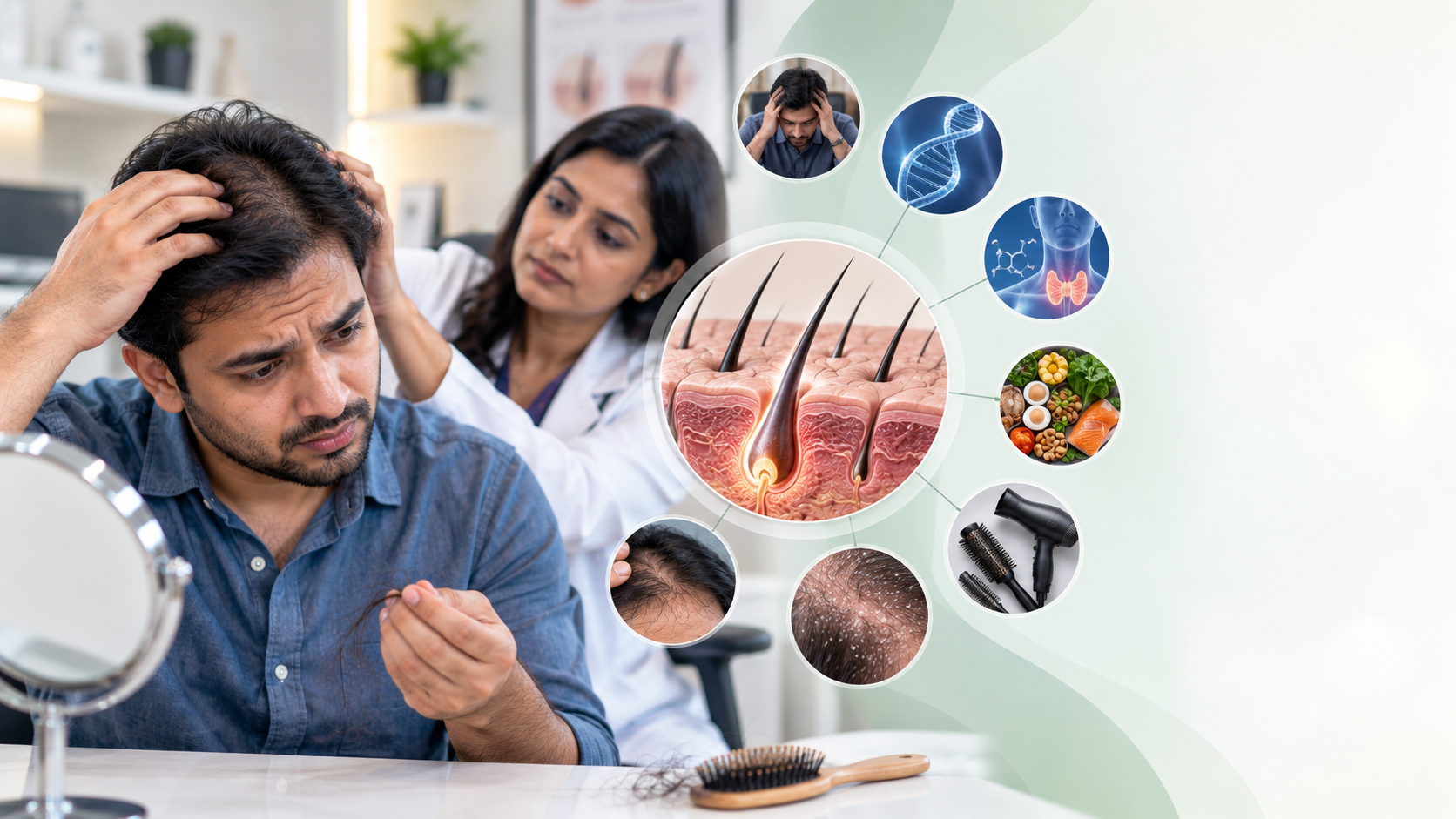
You notice it first in small ways. A few extra strands on your pillow. More hair than usual in the shower drain. A comb that pulls out more than it should. At some point, you catch your reflection and wonder if your part looks wider than it used to.
If this sounds familiar, you’re not alone, and you’re not necessarily doing anything wrong. Some shedding is a normal part of how hair grows and renews itself. But when it becomes noticeable or persistent, it’s worth understanding the causes of hair fall rather than guessing. For many people looking into hair fall treatment in Cuttack, the real starting point isn’t a product — it’s figuring out what’s actually going on with the hair and scalp.
Is Some Hair Shedding Normal?
Hair cycles through phases of growth, rest, and shedding before a new strand takes its place. Because thousands of hairs sit at different points in this cycle at once, losing some hair daily is expected and not a cause for worry on its own.
What matters more than any number is the pattern:
- Normal shedding — hair falls out, but overall density stays the same
- Increased shedding — noticeably more hair than usual, often across the whole scalp
- Noticeable thinning — density visibly reduces, or the scalp becomes more visible
- Patchy hair loss — loss in distinct, localized areas rather than all over
A recent change that’s lasted weeks or months is the real signal — not a single strand count.
Common Causes of Hair Fall
Hair fall rarely has one universal explanation. It usually reflects a mix of genetics, health, and lifestyle factors.
Hereditary or Genetic Hair Loss
Genetic, or pattern, hair loss is among the most common causes of gradual thinning in men and women — a receding hairline, crown thinning, or a widening part. Not every case of thinning is genetic, though, so other causes are still worth ruling out.
Stress and Emotional Strain
Significant physical or emotional stress can sometimes trigger a temporary rise in shedding, often appearing weeks after the event itself. Everyday minor stress doesn’t typically cause noticeable hair loss on its own.
Nutritional Deficiencies
Inadequate nutrition may contribute to hair problems in some people, with iron, protein, zinc, vitamin D, and B12 commonly linked to hair health. Supplements aren’t an automatic fix, and starting them without proper evaluation isn’t advisable.
Hormonal Changes
Thyroid disorders, pregnancy and postpartum changes, menopause, and certain hormonal conditions can all affect shedding and density, though hair changes alone can’t confirm a specific diagnosis.
Medical Conditions
Thyroid disorders, autoimmune conditions, scalp disorders, and some systemic illnesses can contribute to hair loss. Identifying the underlying condition matters more than treating hair loss in isolation.
Medications and Medical Treatments
Some medicines list hair shedding as a possible side effect. If you suspect this, talk to your prescribing doctor rather than stopping the medication yourself.
Scalp Conditions
Inflammation, infections, dandruff-related irritation, and other dermatological conditions can interfere with healthy growth. Persistent itching, redness, or flaking deserves proper evaluation.
Hair Care Practices and Hair Damage
Excessive heat styling, chemical treatments, tight hairstyles, frequent coloring, and rough handling can cause breakage — strands snapping partway along their length. This differs from hair loss starting at the follicle, though both can make hair look thinner.
Sudden vs Gradual Hair Loss
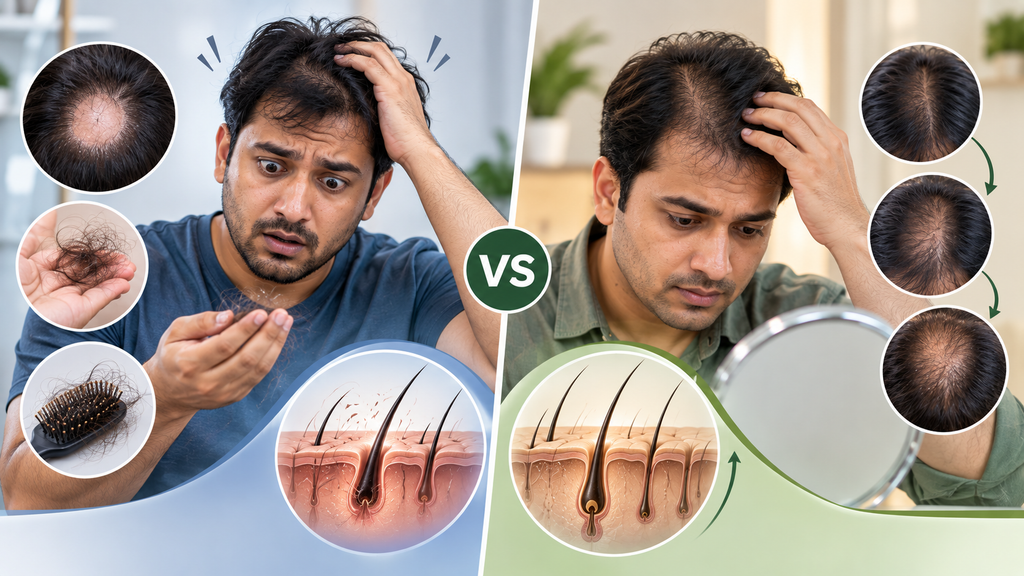
| Pattern | Possible Causes | What to Do |
|---|---|---|
| Sudden hair loss | Major stress, illness, high fever, rapid weight loss, certain medications, postpartum changes | Note when it started and any recent health events; seek evaluation if shedding is heavy |
| Gradual thinning | Genetics, hormonal shifts, chronic nutritional gaps, long-term scalp conditions | Track the pattern over weeks to months; consult a dermatologist if it progresses |
This is a general guide, not a diagnostic tool — the same pattern can have different causes in different people.
When Should You See a Dermatologist for Hair Fall?
Consider a professional evaluation if:
- Hair loss is sudden or rapidly increasing
- Hair is becoming noticeably thinner
- Bald patches appear
- Shedding continues for an extended period
- There’s scalp itching, redness, scaling, or pain
- Eyebrow or body hair is also affected
- Hair loss follows a major illness or physical change
- It’s affecting your confidence or daily life
- You simply aren’t sure what’s causing it
If any of these apply, it’s worth speaking with a qualified dermatologist rather than relying only on online advice.
How Is Hair Loss Evaluated?
A dermatology consultation usually covers medical and family history, the pattern of loss, a scalp exam, and a review of diet, medications, stress, and recent illnesses. Blood tests may follow when appropriate, though not everyone needs every test — evaluation is tailored to the individual.
Can Hair Fall Be Prevented?
Prevention depends on the cause, so no single step works for everyone. Helpful habits include eating a balanced diet, avoiding crash dieting, handling hair gently, limiting tight hairstyles and excessive heat or chemical processing, managing health conditions with professional guidance, avoiding unnecessary supplements, and seeking evaluation when hair loss persists. These support overall hair health but can’t guarantee prevention of every type of loss.
Frequently Asked Questions
1. What Are the Most Common Causes of Hair Fall?
Genetic pattern hair loss, hormonal changes, nutritional gaps, stress, scalp conditions, medications, and underlying medical conditions may all contribute — often more than one at a time.
2. Why Am I Suddenly Losing More Hair Than Usual?
Sudden shedding may follow stress, illness, fever, rapid weight changes, or hormonal shifts, often appearing weeks after the trigger. If it continues, a dermatologist can help identify the cause.
3. How Much Hair Shedding Is Normal?
Some daily shedding is part of the natural growth cycle. Instead of counting strands, watch whether overall density and pattern change over weeks or months.
4. Can Stress Cause Hair Loss?
Significant stress can sometimes trigger temporary shedding, usually appearing some time after the stressful period. Everyday minor stress typically doesn’t cause noticeable loss.
5. Can Vitamin Deficiency Cause Hair Fall?
In some people, deficiencies in iron, zinc, vitamin D, or B12 may contribute to thinning. A proper evaluation can confirm this before any supplementation begins.
6. When Should I See a Dermatologist for Hair Loss?
If hair loss is sudden, rapidly progressing, patchy, accompanied by scalp symptoms, or simply persists over time, a professional evaluation is recommended.
Conclusion
Hair fall rarely comes down to one cause. It can reflect genetics, stress, nutrition, hormones, scalp health, medications, or an underlying medical condition often several at once. Shedding that’s sudden, persistent, patchy, or unexplained deserves a closer look rather than guesswork with random products. Speaking with a qualified dermatologist can help you understand what’s actually happening and what steps genuinely make sense for you.
Worried About Hair Loss? Book a Consultation Today
If your hair fall has been on your mind, it helps to talk it through with someone who can examine your scalp and history rather than rely on search results alone. Dr. Chinmayee Kar is a dermatologist focused on hair and scalp health, including hair transplant evaluations for patients who may be candidates for the procedure. She works with patients to understand the specific factors behind their hair loss before recommending any course of action, whether that’s lifestyle changes, medical management, or a referral for further tests.
If you’re in Cuttack, Odisha, and considering a hair fall consultation in Cuttack, getting an informed opinion is often the most useful first step well before deciding on any treatment.
Visit Pearl Hair Transplant Clinic and book your consultation today
Pearl Hair Transplant
Address: Near Reliance Fresh, CDA Sector VI, Cuttack, Odisha 753014
Call: +91 70088 01645
Book your appointment today and discover the ultimate solution for your hair fall concerns.
Disclaimer :- The information provided in this blog is intended for general educational and informational purposes only. It is not intended to replace professional medical advice, diagnosis, or treatment from a qualified healthcare professional.
