
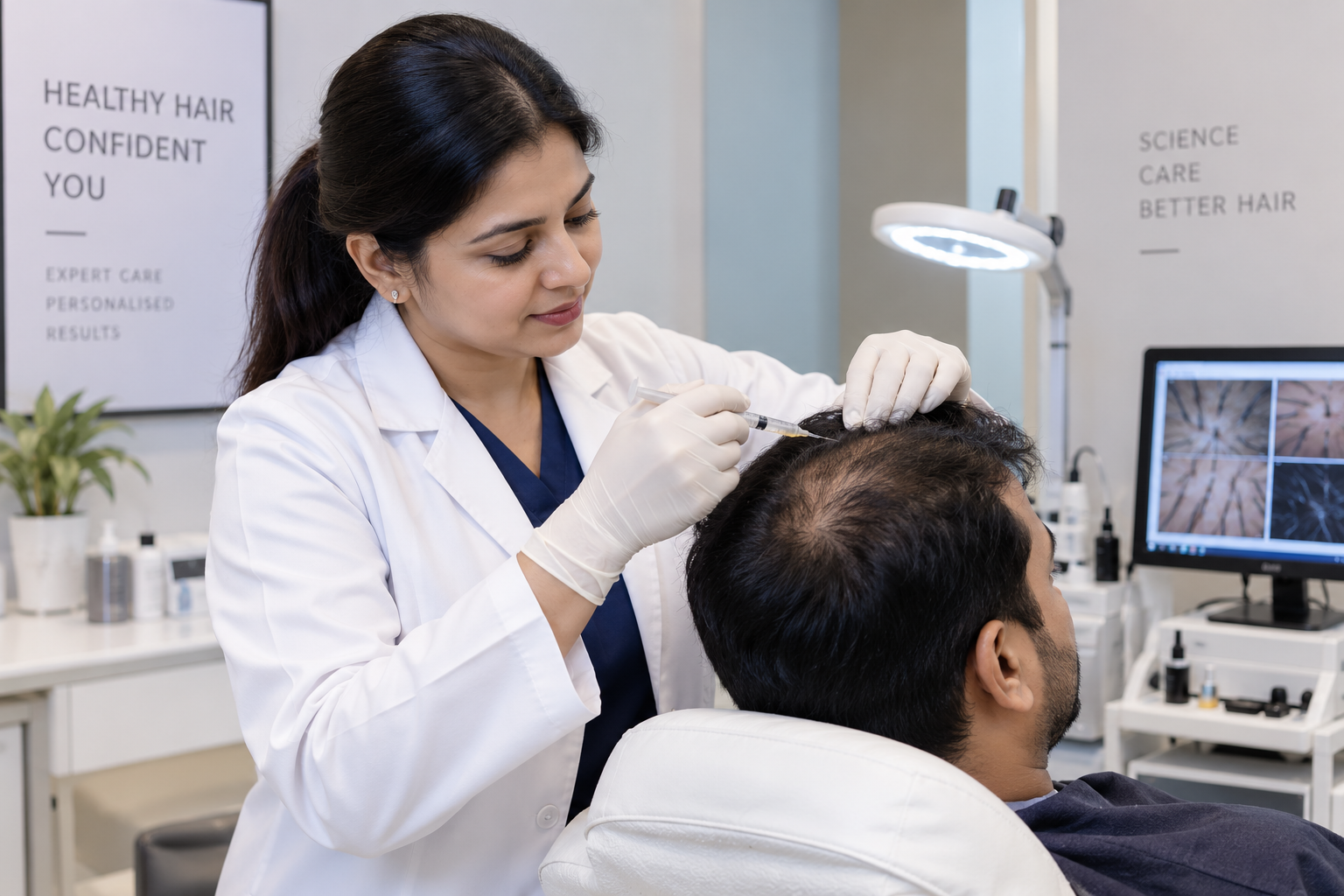
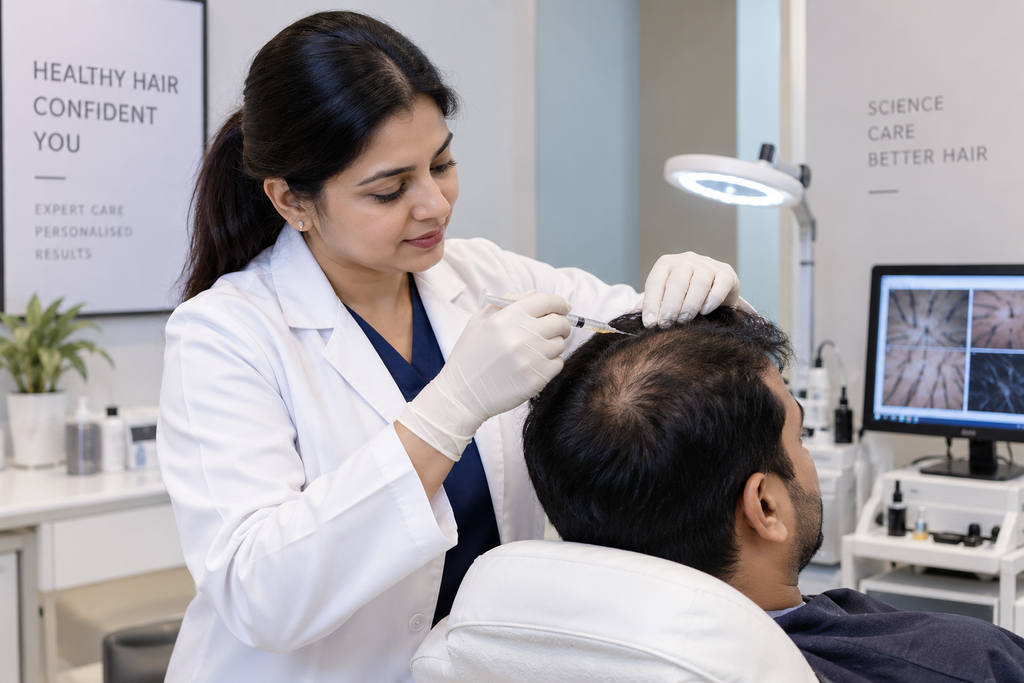
it often starts quietly: a few extra strands on the pillow, more hair in the comb after a shower, a widening part, or a hairline that seems to move back a little each month. the first instinct is to search online for the Best Hair Clinic Cuttack, only to find advertisements, price offers, and confusing claims. But hair loss is not one condition, and symptoms alone cannot confirm why it is happening; genetics, hormones, nutrition, stress, scalp disease, and underlying medical conditions can all play a role. The wiser next step is not to pick a name blindly but to understand what truly matters—qualifications, diagnosis, treatment planning, transparency, and follow-up so this guide helps you choose a hair-loss clinic in Cuttack with clarity and realistic expectations.
Understanding the Cause of Hair Loss Comes First
Hair loss has many possible causes, and identifying the correct one is the foundation of effective treatment.
Androgenetic alopecia (pattern hair loss) is the most common form, driven by genetic and hormonal factors. It typically causes a receding hairline or vertex thinning in men and diffuse thinning over the crown in women. Telogen effluvium is a reactive shedding condition often triggered by surgery, childbirth, rapid weight loss, nutritional deficiencies, or severe stress. It usually appears two to three months after the triggering event. Alopecia areata is an autoimmune condition that causes patchy hair loss and may require targeted medical therapy.
Other contributing factors include thyroid dysfunction, iron deficiency, polycystic ovary syndrome, scalp infections, and certain medications. Hair-loss symptoms alone do not establish a diagnosis. A doctor needs to take a history, examine the scalp, and sometimes order targeted investigations before recommending treatment.
What to Consider When Choosing a Hair Clinic in Cuttack
When evaluating a Best Hair Clinic Cuttack option, consider the following factors rather than relying on marketing claims alone.
Relevant medical qualifications. A dermatologist holds a medical degree (MBBS) followed by postgraduate training (MD or DNB) in dermatology. Trichologists may have specialist training in hair and scalp disorders but do not always hold a medical degree. For conditions that may require prescription medication, biopsies, or surgical intervention, a medically qualified dermatologist is often the appropriate first point of contact.
Training and experience with different patterns of hair loss. Hair loss presents differently across age groups, genders, and conditions. A clinic that regularly evaluates and manages diverse presentations—pattern baldness, diffuse shedding, patchy loss, and scarring alopecia—is better positioned to recognize when a presentation is atypical.
Approach to diagnosis. Does the consultation include a structured history, scalp examination, and hair-pull test? Is the doctor willing to explain the reasoning behind any recommended tests? A diagnosis-driven approach is more reliable than a treatment-first approach.
Individualized treatment planning. Hair restoration options are not one-size-fits-all. Medical therapy, platelet-rich plasma, low-level laser therapy, and surgical restoration each have specific indications. A qualified doctor should recommend treatment based on your diagnosis, degree of hair loss, donor characteristics, and goals—not based on what the clinic offers most frequently.
Transparency about expected results. No treatment can guarantee complete regrowth or permanent results for every patient. A trustworthy clinic will discuss realistic timelines, potential limitations, and the possibility that additional treatment may be needed.
Follow-up care. Hair-loss treatment often requires months of monitoring. Ask how follow-up is structured and whether the same doctor reviews your progress.
Clinic standards and safety practices. For any procedural or surgical treatment, ask about sterilization protocols, who performs each step of the procedure, and what emergency protocols are in place.
No single qualification, technology, or technique automatically makes a clinic superior. The quality of the clinical assessment and the appropriateness of the treatment plan matter more than brand names.
Does the Clinic Properly Diagnose Hair Loss?
A thorough hair-loss evaluation typically includes several components.
- Medical and family history: onset, duration, progression, and any family history of pattern hair loss.
- Hair-loss pattern assessment: whether loss is diffuse, patterned, patchy, or localized.
- Scalp examination: checking for erythema, scaling, follicular ostia loss, and signs of inflammation.
- Hair-pull test: a simple bedside test to assess active shedding.
- Donor-area evaluation where relevant: assessing density, hair caliber, and stability of the occipital scalp for surgical planning.
- Assessment of hair density: tracking changes over time to evaluate treatment response.
- Previous treatments: what has been tried, for how long, and with what response.
- Lifestyle and contributing factors: stress, diet, medications, and underlying medical conditions.
Additional investigations—such as blood tests for ferritin, thyroid function, vitamin D, or zinc—may be recommended depending on the individual’s history and clinical findings. These are not universal requirements; they are guided by clinical suspicion. In some cases, a scalp biopsy may be advised when a scarring process is suspected.
When Should You Consider a Hair Transplant Clinic?
Medical management and surgical hair restoration serve different purposes. Medical therapy aims to slow or stabilize hair loss and may support partial regrowth in selected patients. Hair transplantation redistributes androgen-resistant follicles from the donor area to thinning or bald areas.
Patients may ask about hair transplantation when they have stable pattern hair loss, a suitable donor area, and cosmetic concerns about permanent hair loss that has not responded adequately to medical therapy.
However, not every person with hair loss is a suitable candidate for a transplant. A qualified hair transplant clinic in Cuttack should evaluate the cause of hair loss, donor supply, degree of loss, scalp health, and long-term planning before recommending surgery. Active inflammatory or patchy conditions may need treatment before surgery is considered. Patients with unrealistic expectations or medical conditions that compromise surgical outcomes may not be appropriate candidates.
What About Hair Transplant Techniques?
Two mainstream techniques are commonly discussed: follicular unit extraction (FUE) and follicular unit transplantation (FUT) . FUE removes individual follicular units with tiny punches, typically resulting in small dot scars and a less traumatic postoperative course. FUT removes a strip of scalp from the donor area and dissects it into grafts under a microscope, which can allow harvesting of more grafts in a single session.
Both techniques can produce natural results when performed with proper planning and graft handling. Technique selection depends on individual clinical factors, donor characteristics, coverage goals, and the treating doctor’s assessment. Neither technique is universally superior.
No hair transplant is risk-free. Potential risks include infection, scarring, shock loss, and unsatisfactory density. No procedure guarantees 100% success or permanent results for every patient.
Why Before-and-After Photos Need Careful Evaluation
Before-and-after photographs can be useful educational tools, but they should be interpreted cautiously. When reviewing results, consider whether the comparison involves a similar hair-loss pattern, comparable degree of baldness, similar donor characteristics, consistent lighting, multiple angles, and an appropriate follow-up period. Ask whether the images represent actual patients of the clinic.
Photographs can demonstrate possible outcomes but cannot guarantee the same result for another patient. Individual biology, healing, and adherence to post-procedure care all influence outcomes.
Don’t Choose a Hair Clinic Based Only on Price
Treatment cost is a legitimate consideration, but it should not be the sole deciding factor. When comparing quotes, ask what the consultation includes, who performs the procedure, what technique is being recommended, whether diagnosis is included, what follow-up arrangements exist, and what is included in the quoted treatment. A lower price may reflect differences in who performs the procedure, the number of grafts planned, or the level of post-procedure support.
Understanding the full scope of care is more useful than comparing headline prices alone.
Questions to Ask During a Hair Loss Consultation
Bringing a list of questions can help you get the most from your consultation.
- What could be causing my hair loss?
- What type of hair loss do I have?
- Do I need medical treatment before considering a transplant?
- Am I a suitable candidate for hair transplantation?
- How is my donor area?
- What treatment options are appropriate for my condition?
- What results are realistically possible?
- What are the potential risks or limitations?
- What follow-up will be required?
- How long should I expect before evaluating the result?
When You Should Seek Professional Evaluation
Consider professional evaluation if you experience sudden or rapid hair loss, noticeable patches of hair loss, significant scalp changes such as redness, scaling, or pain, persistent excessive shedding, a rapidly receding hairline, progressive thinning, or hair loss accompanied by other concerning symptoms. Early evaluation can help identify treatable causes and prevent unnecessary progression.
Taking the Next Step
Choosing the Best Hair Clinic Cuttack is not about advertisements or price alone. Look for proper diagnosis, individualized treatment planning, transparent expectations, safety, and reliable follow-up. If hair fall, thinning, or a receding hairline concerns you, book a hair-loss consultation in Cuttack and understand your options before deciding on any treatment.
Frequently Asked Questions(FAQ)
1. How do I choose the Best Hair Clinic Cuttack?
Ans :- Look for a medically qualified dermatologist with experience in diagnosing and treating different types of hair loss. Consider the clinic’s approach to diagnosis, transparency about results, follow-up care, and safety standards. Avoid choosing based solely on advertisements or price.
2.What should I expect during a hair-loss consultation?
Ans :- A typical consultation includes a medical and family history, scalp examination, assessment of hair-loss pattern and density, and discussion of previous treatments. Additional tests may be recommended based on clinical findings. You should leave with a clearer understanding of your diagnosis and treatment options.
3. When should I consider seeing a hair specialist?
Ans :- If you notice persistent excessive shedding, visible thinning, patchy hair loss, a receding hairline, or scalp changes, professional evaluation is appropriate. Early assessment can help identify treatable causes.
4. Is every person with hair loss suitable for a hair transplant?
Ans :- No. Candidacy depends on the cause of hair loss, donor area quality, degree of loss, scalp health, and realistic expectations. A qualified doctor should assess these factors before recommending surgery.
5. How do I know whether I need medical treatment or a hair transplant?
Ans :- This depends on your diagnosis, the stability of your hair loss, and your response to medical therapy. Many patients benefit from medical management first, with surgery considered if results are inadequate and candidacy criteria are met.
6. What should I ask before choosing a hair restoration clinic?
Ans :- Ask who will perform the procedure, what technique is recommended and why, what is included in the quoted cost, what follow-up is provided, and what results are realistically achievable for your case.
7. How long does it take to assess hair-loss treatment results?
Ans :- Medical treatments for hair loss typically require several months before changes can be evaluated. Hair transplantation results also take months to mature, as transplanted follicles go through a growth cycle. Your doctor should provide a realistic timeline based on your treatment plan..
Conclusion
Choosing the Best Hair Clinic Cuttack means prioritizing proper diagnosis, individualized treatment, safety, transparency, and follow-up. If hair fall, thinning, or a receding hairline concerns you, book a hair loss consultation in Cuttack and discuss your options with a qualified doctor before deciding on treatment. Early evaluation can identify treatable causes, guide appropriate care, and help set realistic expectations.
Visit Our Clinic : Pearl Hair Transplant
Address :- near Reliance Fresh, CDA Sector VI, Kataka, Odisha 753014
Call :- +91 70088 01645
Visit Location :- https://maps.app.goo.gl/LpX9hMCnFGGG7wdKA
Book an appointment today and get a professional consultation for your hair treatment
