
You run your fingers through your hair, and it happens again a few more strands than usual remain tangled between them. Maybe your parting looks a little wider in the mirror, or the ponytail you once wrapped three times now only needs two. For many men and women in Cuttack, this gradual change is frustrating and often confusing. You are not alone in wondering whether the thinning will stop or if anything can be done. Platelet-rich plasma (PRP) therapy has become one of the most discussed options for hair thinning. It uses a concentrated portion of your own blood, which contains platelets and growth factors, to support the scalp environment. While PRP may help some people with certain types of hair loss, it is important to understand that results vary and it is not a suitable option for every condition. If you are researching PRP Hair Treatment in Cuttack, this guide explains the procedure, realistic expectations, and what to discuss with a specialist.
What Is PRP Hair Treatment?
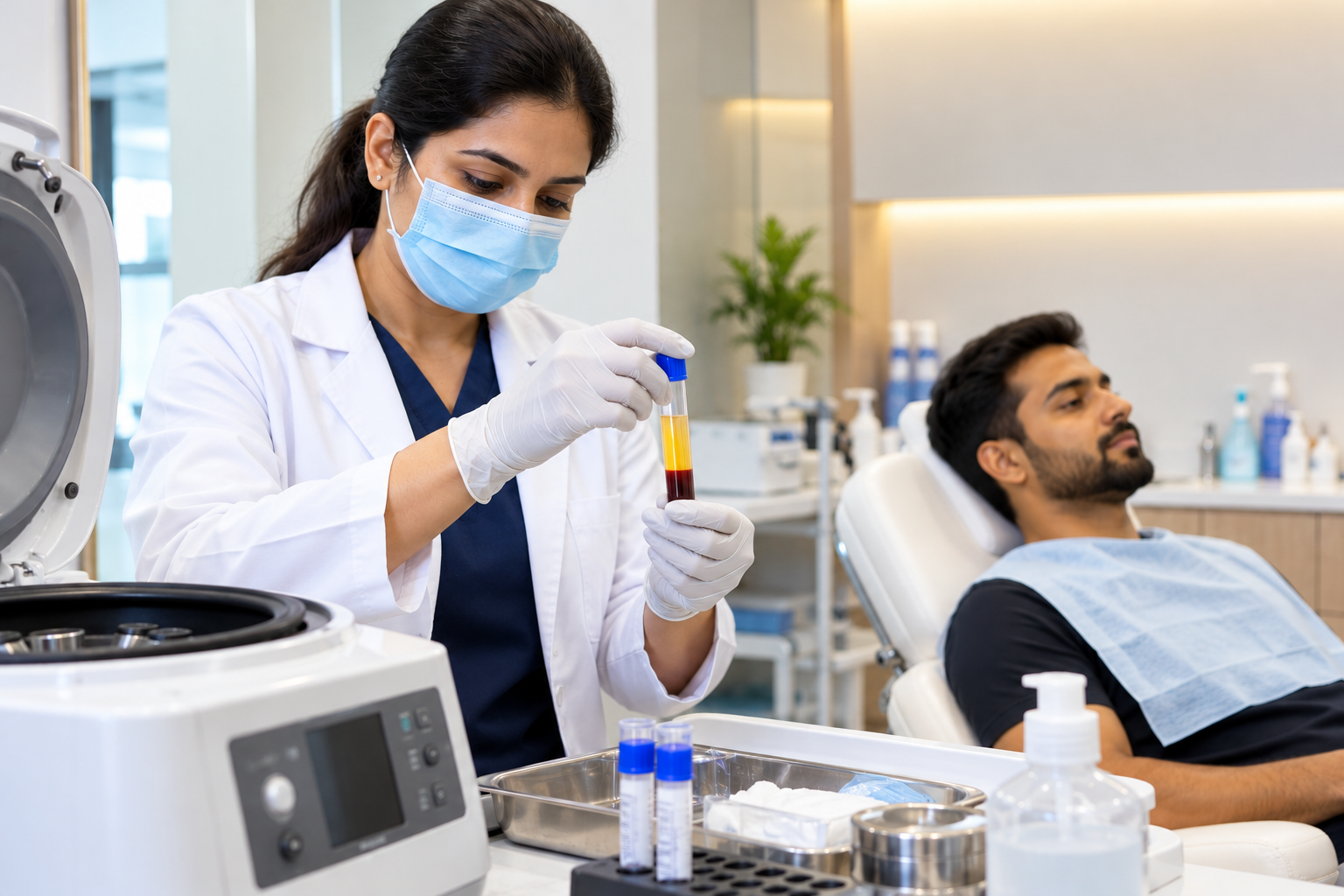
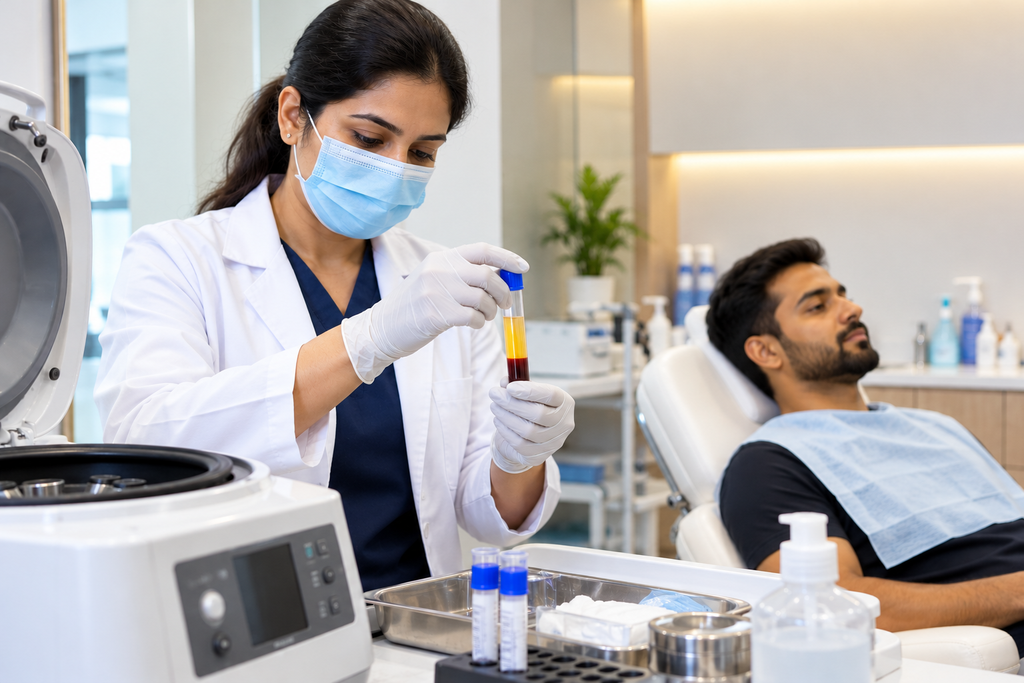
PRP stands for platelet-rich plasma. Plasma is the liquid part of your blood, and platelets are cells known for their role in clottingbut they also contain growth factors that participate in tissue repair and cellular signalling . To create PRP, a small blood sample is collected from you, placed in a device called a centrifuge, and spun to separate and concentrate the platelets within the plasma . In hair restoration, PRP is used as an option for selected hair-loss conditions, particularly pattern hair loss. It is thought that the growth factors in PRP may help support follicular health when introduced into the scalp. However, PRP does not create new hair follicles, and it does not guarantee hair regrowth for everyone.
How Does PRP Therapy Work for Hair Loss?
The procedure is straightforward, though specific protocols differ between clinics and practitioners:
- Blood collection: A small sample of your blood is drawn, similar to a routine blood test.
- Processing: The sample is centrifuged to concentrate the platelets and growth factors into a smaller volume of plasma.
- Administration: A qualified practitioner injects the prepared PRP into selected areas of the scalp using fine needles. Topical numbing cream is often applied beforehand to reduce discomfort.
- Post-treatment guidance: You receive instructions on scalp care and follow-up, and your progress is monitored over subsequent visits.
Treatment protocols including the number of sessions, spacing, and injection technique—vary between clinics and are tailored to individual patients .
Who May Benefit from PRP Hair Treatment?
PRP may be considered for some people experiencing pattern hair loss or reduced hair density. Suitability depends on several factors:
- The underlying cause of hair loss. PRP is most often discussed for androgenetic alopecia (male or female pattern baldness), but not all hair-loss conditions respond similarly .
- The pattern and degree of thinning. Early to moderate thinning is generally considered a more appropriate stage for PRP than extensive, long-standing baldness.
- The condition of existing hair follicles. Follicles that are still active may respond differently than areas with complete scarring or long-term inactivity.
- Medical history. Certain blood disorders, immunosuppression, or anticoagulant use may make PRP unsuitable .
- Previous treatments and individual goals. Your practitioner should discuss whether PRP fits into a broader hair restoration plan.
PRP is not appropriate for every form of hair loss. Some conditions, such as sudden patchy hair loss, thyroid-related shedding, or nutritional deficiencies, require specific medical evaluation and treatment before any cosmetic procedure is considered. Persistent, sudden, severe, or unexplained hair loss warrants professional assessment.
What Are the Potential Benefits of PRP Hair Treatment?
Evidence for PRP in pattern hair loss is growing, though it is not uniform across all studies or protocols. With cautious interpretation, potential benefits discussed in clinical literature include:
- May help reduce hair shedding in some patients after a series of sessions.
- May improve hair density or thickness in selected cases, particularly early androgenetic alopecia .
- Minimally invasive approach compared with surgical hair restoration.
- Uses material derived from your own blood, which lowers the risk of allergic reaction compared with some injectable medications .
- Usually limited downtime, with most people able to return to daily activities shortly after the session.
These are potential outcomes, not guarantees. Response to PRP varies, and evidence differs across hair-loss types and preparation methods.
What Happens During a PRP Hair Treatment Session?
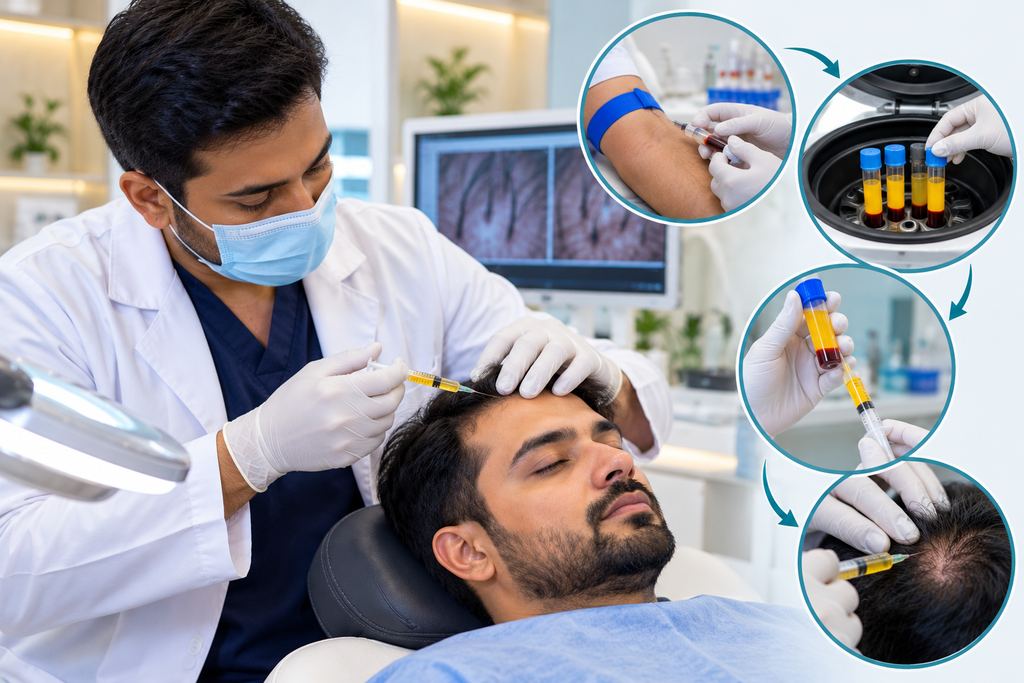
A typical session at a hair restoration clinic follows a structured sequence:
- Initial consultation and scalp examination. Your practitioner reviews your hair-loss history, examines the scalp, and may use trichoscopy to assess follicle health.
- Medical history review. Medications, existing conditions, and previous treatments are discussed to confirm PRP is appropriate for you.
- Blood collection. A small sample is drawn, usually from your arm.
- PRP preparation. The sample is processed in a centrifuge according to the clinic’s protocol.
- Scalp preparation. The treatment area is cleansed, and topical anesthetic may be applied to improve comfort.
- PRP administration. The prepared plasma is injected into targeted areas of the scalp.
- Post-procedure care. You receive aftercare instructions and a follow-up schedule.
Appointment duration varies by clinic and the number of areas treated.
Are There Any Side Effects of PRP Hair Treatment?
PRP is generally considered a low-risk procedure when performed appropriately, but temporary effects can occur:
- Mild pain or tenderness at injection sites
- Redness
- Swelling
- Minor bruising
- Temporary scalp discomfort
Infection and other complications are possible, though their likelihood depends on technique, hygiene, and individual circumstances. Because PRP involves a blood draw and injections, you should discuss your medical history, medications, and any concerns with the treating practitioner before proceeding.
How to Choose a PRP Hair Treatment Clinic in Cuttack
When evaluating options for PRP Hair Treatment consider these practical criteria:
- Qualified healthcare professional with experience in hair and scalp conditions
- Proper diagnosis before treatment, not a one-size-fits-all recommendation
- Appropriate clinical hygiene and sterile technique
- Transparent explanation of benefits and limitations
- Individualized treatment plan tailored to your hair-loss pattern
- Clear pricing and session details
- Follow-up and progress monitoring
Pearl Hair Transplant in Cuttack provides PRP therapy as part of its hair restoration services. A consultation can help determine whether PRP is appropriate for your specific situation.
Frequently Asked Questions About PRP Hair Treatment
1. Is PRP hair treatment effective for hair loss?
Ans :- Evidence suggests PRP may help some people with pattern hair loss, particularly in improving density or reducing shedding. It is not universally effective, and response varies.
2. Is PRP hair treatment painful?
Ans :- Most clinics use topical anesthetic to reduce discomfort. You may feel mild stinging during injections, and the scalp may be tender afterward.
3. How long does PRP take to show results?
Ans :- Reduced shedding may be noticed within one to two months in some patients. Visible changes in thickness or density typically take three to six months or longer.
4. How many PRP sessions may be needed?
Ans :- A common initial series involves several sessions spaced weeks apart, followed by maintenance. The exact plan depends on your condition and response.
5. Are PRP hair treatment results permanent?
Ans :- No. Benefits are not permanent, and maintenance sessions are often recommended to sustain results.
6. Can PRP stop genetic hair loss?
Ans :- PRP may help slow progression or support density in some people with androgenetic alopecia, but it does not cure genetic hair loss. It is often used alongside other treatments.
7. Is PRP better than GFC for hair loss?
Ans :- Neither is universally better. Both use blood-derived components with different preparation methods, and evidence comparing them is not definitive. Suitability depends on individual assessment.
8. What is the cost of PRP hair treatment in Cuttack?
Ans :- Cost varies by session number, clinic, protocol, and diagnostic requirements. Request a personalized estimate after consultation.
Conclusion
PRP therapy uses a concentration of platelets and growth factors from your own blood to support the scalp environment in selected types of hair loss. The procedure involves a blood draw, processing, and targeted injections, with results that emerge gradually over months and vary between individuals. It is not a universal solution, and suitability depends on an accurate diagnosis of why your hair is thinning. If you are experiencing persistent hair fall or hair thinning and are considering PRP Hair Treatment in Cuttack, consult a qualified hair specialist to understand the cause of your hair loss and whether PRP may be appropriate for you. Pearl Hair Transplant, Cuttack, offers consultations to assess your hair and scalp and discuss individualized options.
Get a Proper Diagnosis Before Spending on Treatment
Hair loss has many causes—genetic pattern baldness, nutritional deficiencies, thyroid issues, stress-related shedding, and more. Each needs a different approach. A qualified hair specialist can identify what’s driving your thinning and tell you honestly whether PRP therapy can help—or whether another treatment is more appropriate.
PRP Hair Treatment in Cuttack at Pearl Hair Transplant
Ready to take the first step toward healthier, fuller-looking hair? Pearl Hair Transplant, Cuttack, offers personalized PRP therapy plans based on a proper diagnosis of your hair-loss condition—not a one-size-fits-all approach.
Book Your PRP Consultation in Cuttack
Address :- Near Reliance Fresh, CDA Sector VI, Kataka, Odisha 753014
Visit Location :- https://maps.app.goo.gl/rYui2TcAP8DqVrgf7
Book an appointment today and get a consultation for PRP hair treatments
