
Anjali was twenty-nine when she first noticed something that made her pause. She was cleaning her hairbrush after a regular morning routine and realised there was significantly more hair tangled in the bristles than usual. She shrugged it off. It was probably the changing weather, or maybe the new shampoo she had been trying.
A few weeks later, she noticed her hair parting looked slightly wider than before. When she tied her hair, the ponytail felt thinner in her hand. Her mother commented casually that her hair was looking “a little less dense lately.” Anjali laughed it off, but internally she began to worry.
Not every case of hair loss requires a transplant. In fact, for many individuals, understanding the cause and exploring non-surgical hair loss treatment in cuttack is the most appropriate first step
What Is Hair Loss?
Before discussing treatments, it helps to understand what hair loss actually means. Every person loses hair daily. Shedding around fifty to a hundred strands per day is considered normal and is part of the natural hair growth cycle. This type of shedding usually goes unnoticed.
However, when the rate of shedding increases noticeably, or when hair becomes progressively thinner over time and does not grow back with the same density, it may indicate an underlying issue that deserves attention.
The key difference lies in the pattern. Temporary shedding—such as the kind that occurs after a stressful event or illness—often resolves on its own once the body recovers. Progressive thinning, on the other hand, tends to continue and may require intervention. Identifying which type of hair loss is occurring is essential before choosing any treatment.
Common Causes of Hair Loss
Hair loss does not have a single cause, which is why one treatment cannot work for everyone. Some of the more common contributing factors include:
- Genetic or pattern hair loss: The most common cause, often referred to as androgenetic alopecia. It can affect both men and women and is influenced by family history and hormonal factors.
- Stress: Significant physical or emotional stress can push hair follicles into a resting phase, leading to increased shedding a few months later.
- Nutritional deficiencies: Low levels of iron, vitamin D, vitamin B12, or protein can affect hair health and contribute to thinning.
- Hormonal changes: Conditions such as thyroid disorders, polycystic ovary syndrome, pregnancy, and menopause can all influence hair density.
- Certain medical conditions: Autoimmune conditions, scalp infections, and chronic illnesses can cause hair loss.
- Scalp conditions: Dandruff, seborrheic dermatitis, and psoriasis can affect the scalp environment and hair quality.
- Some medications: Certain drugs used for blood pressure, cholesterol, depression, or hormonal conditions may list hair loss as a possible side effect.
- Significant illness or physical stress: A high fever, major surgery, or rapid weight loss can trigger temporary shedding.
- Poor hair and scalp care: Excessive heat styling, harsh chemical treatments, and tight hairstyles can cause breakage and traction alopecia.
Because the causes vary so widely, persistent or sudden hair loss should be evaluated by a qualified healthcare professional rather than self-diagnosed through online searches.
Non-Surgical Hair Loss Treatment in Cuttack: What Are Your Options?
For those seeking hair regrowth treatment in cuttack, it is helpful to know that several non-surgical approaches are available. These treatments are generally designed to manage hair loss, slow its progression, or support existing follicles—particularly when the hair follicles are still active. The appropriate choice depends entirely on the underlying cause, the stage of hair loss, and individual health factors.
1. Topical Treatments
Topical treatments are products applied directly to the scalp. They are among the most commonly used non-surgical approaches for certain types of hair loss, particularly androgenetic alopecia.
The most widely recognised topical ingredient is minoxidil, which is available in different strengths. It is believed to work by improving blood flow to the hair follicles and prolonging the growth phase of the hair cycle. It is commonly used for both male and female pattern hair loss.
Topical treatments may be considered when the diagnosis is clear and the hair follicles are still functioning. However, consistency is essential irregular application can reduce effectiveness—and results can take several months to become noticeable. Importantly, not everyone responds to topical treatments, and any decision to use them should be guided by a professional who can confirm the diagnosis and advise on appropriate use.
2. Oral Medication
In certain cases, a doctor may recommend oral medication to address the underlying cause of hair loss. For men with androgenetic alopecia, medications that affect hormone metabolism may be prescribed. For women, hormonal therapies or treatments addressing underlying conditions such as thyroid dysfunction or nutritional deficiencies may be appropriate.
Oral medications should only be considered after consultation with a qualified doctor. Suitability, potential side effects, and contraindications vary significantly between individuals. Self-medicating based on online recommendations is unsafe and can lead to unwanted effects without addressing the true cause of hair loss.
3. Platelet-Rich Plasma (PRP) Therapy
PRP therapy is a non-surgical approach that has gained significant attention in the field of hair restoration. It involves drawing a small amount of the patient’s own blood, processing it in a centrifuge to concentrate the platelets, and then injecting the platelet-rich plasma into the scalp in areas affected by thinning.
The rationale behind PRP is that platelets contain growth factors proteins that play a role in tissue repair and regeneration. When introduced into the scalp, these growth factors may help stimulate follicle activity and support the hair growth cycle.
PRP is generally considered when there is still active follicle function. It is not a treatment for areas of complete baldness where follicles have been permanently lost. Multiple sessions are often recommended as part of a treatment plan, and results can vary depending on the individual’s age, the cause of hair loss, and the severity of thinning. The quality of the PRP preparation and the precision of the injection technique also influence outcomes.
For those exploring PRP Hair Treatment, a consultation can help determine whether this approach is appropriate for the specific type of hair loss.
4. Growth Factor or Regenerative Hair Treatments
Some clinics offer growth-factor-based or regenerative treatments that aim to deliver concentrated growth factors to the scalp using methods similar to or refined from PRP. These approaches may involve different preparation techniques designed to isolate specific components from the patient’s blood.
While these treatments are increasingly discussed in the context of hair restoration, protocols and evidence can differ. Patients should understand what a particular treatment involves, what it aims to achieve, and what realistic outcomes may look like. Regenerative approaches may be considered for certain types of hair thinning, but they are not proven cures for every form of hair loss.
5. Low-Level Light Therapy
Low-level light therapy, sometimes called LLLT or red light therapy, is a non-invasive approach that uses specific wavelengths of light directed at the scalp. The intention is to stimulate cellular activity within the hair follicles and support the growth phase of the hair cycle.
LLLT devices are available in various forms, including caps, combs, and in-clinic equipment. While some studies suggest that LLLT may help improve hair density in individuals with androgenetic alopecia, results vary, and the treatment is not suitable for every type of hair loss. It is generally considered a supportive therapy rather than a standalone solution for advanced hair loss.
6. Scalp and Hair Care
While good hair care alone cannot reverse genetic or medical causes of hair loss, it plays an important supportive role. Neglecting scalp health can worsen existing conditions or contribute to breakage that mimics hair loss.
Practical steps include:
- Gentle scalp cleansing to maintain a healthy environment
- Avoiding excessive heat from dryers and styling tools
- Limiting harsh chemical treatments such as repeated colouring or straightening
- Managing dandruff or scalp conditions with appropriate treatment
- Avoiding overly tight hairstyles that pull on the hair roots
- Maintaining a balanced diet with adequate protein, iron, and vitamins
These measures are supportive, not curative. For progressive hair loss, professional evaluation remains essential.
Which Non-Surgical Hair Loss Treatment Is Right for You?
There is no single answer to this question. The most appropriate treatment depends on identifying the cause of hair loss, and this requires proper assessment.
During a consultation, a doctor may consider:
- Age and gender
- Pattern and duration of hair loss
- Family history of hair thinning
- Scalp condition and follicle health
- Recent illness, stress, or medication use
- Diet and nutritional status
- Hormonal factors
- Existing medical conditions
- Previous treatments and their outcomes
A consultation helps determine whether treatment is needed, which approach may be most suitable, and what outcomes can realistically be expected.
When exploring hair loss treatment in cuttack, consulting a qualified professional such as Dr Chinmayee Kar can help you understand the possible cause of your hair loss and discuss suitable treatment options based on your individual situation.
Quick Comparison: Non-Surgical Hair Loss Treatments
| Treatment | What It Involves | Common Purpose | Important Consideration |
| Topical Treatment | Application of solution or foam to the scalp | Managing pattern hair loss | Requires consistency; results vary |
| Oral Medication | Prescription tablets taken as directed | Addressing hormonal or nutritional causes | Must be prescribed after proper diagnosis |
| PRP Therapy | Injections of platelet-rich plasma from own blood | Stimulating follicle activity | Multiple sessions often recommended |
| Growth Factor Treatments | Concentrated growth factors delivered to the scalp | Supporting hair growth in selected cases | Protocols differ; evidence varies |
| Low-Level Light Therapy | Light devices used on the scalp | Supporting follicle function | Supportive role; not for all hair loss types |
| Scalp and Hair Care | Gentle cleansing, avoiding damage, balanced diet | Maintaining scalp health | Supportive only; does not reverse genetic loss |
Non-Surgical Treatment vs Hair Transplant: Are They the Same?
This is an important distinction. Non-surgical treatments and hair transplants are fundamentally different approaches designed for different situations.
Non-surgical treatments aim to manage certain types of hair loss, slow down progression, or support existing hair follicles. They are generally most effective when the follicles are still active and capable of producing hair.
A hair transplant is a surgical procedure that moves healthy hair follicles from a donor area to areas of thinning or baldness. It is typically considered when there is established baldness with adequate donor hair and when the hair loss pattern is stable.
Not everyone with hair loss needs a transplant. Many individuals, especially those in the early stages of thinning, may benefit from non-surgical approaches first. The appropriate option depends entirely on the diagnosis and the extent of hair loss. For those interested in understanding surgical options, information about Hair Restoration can provide further clarity.
When Should You See a Hair Loss Specialist?
Certain signs suggest that professional evaluation is appropriate:
- Sudden or rapid hair loss over a short period
- Visible bald patches on the scalp
- Persistent scalp itching, scaling, or inflammation
- Hair loss accompanied by other symptoms such as fatigue or weight changes
- Hair thinning that continues despite basic hair care
- Significant thinning that is affecting confidence or daily life
- Hair loss after a major illness, surgery, or stressful event
- Uncertainty about the cause of hair loss
Seeking professional guidance early can help identify reversible causes and prevent further progression in cases where treatment is available.
What Can You Expect During a Hair Loss Consultation?
Understanding the consultation process can reduce anxiety about seeking help. A typical hair loss consultation involves:
- A detailed discussion of your hair loss history—when it began, how it has progressed, and any patterns you have noticed
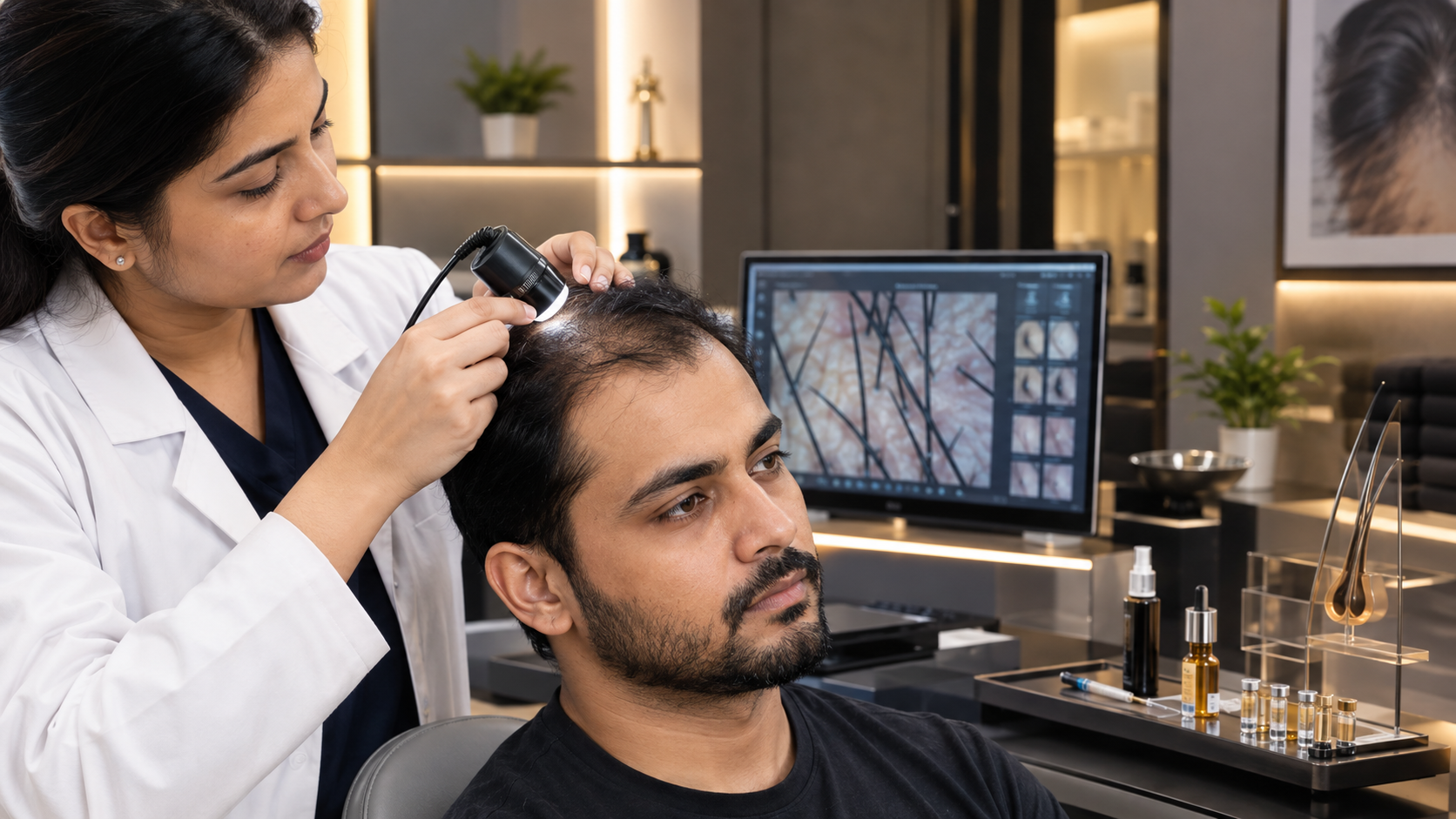
- Examination of the scalp and hair using appropriate tools to assess follicle health
- Discussion of family history, lifestyle factors, recent stressors, and medical conditions
- Identification of the likely cause or recommendation of further investigations if needed
- Discussion of suitable treatment options based on the diagnosis
- Setting realistic expectations about what treatment can and cannot achieve
- Planning follow-up and monitoring where appropriate
During a consultation with Dr Chinmayee Kar, patients can discuss their hair-loss concerns openly and receive guidance tailored to their individual pattern, scalp condition, and treatment goals.
Frequently Asked Questions About Non-Surgical Hair Loss Treatment
1. Can hair loss be treated without a hair transplant?
Yes. Many types of hair loss, particularly in the early stages, can be managed with non-surgical approaches such as topical treatments, oral medications, PRP therapy, or a combination of methods. Suitability depends on the cause of hair loss.
2. What is the best non-surgical treatment for hair loss?
There is no single best treatment for everyone. The appropriate option depends on the underlying cause, the stage of hair loss, and individual health factors. A professional evaluation is necessary to determine the most suitable approach.
3. Does PRP help with hair thinning?
PRP may help support follicle activity in certain types of hair thinning, particularly when follicles are still active. Results vary, and multiple sessions are often recommended as part of a treatment plan.
4. How long does hair loss treatment take to show results?
Non-surgical treatments generally take time. Some individuals may notice changes after several months of consistent treatment, while others may require longer. Patience and regular follow-up are important.
5. Can hair loss caused by stress grow back?
In many cases, stress-related hair shedding is temporary and hair regrows once the underlying stressor is resolved and the body recovers. However, persistent or progressive hair loss should be evaluated.
6. Is hair loss treatment suitable for everyone?
Not every treatment is suitable for every person or every type of hair loss. Suitability depends on the diagnosis, medical history, and individual circumstances. A consultation helps determine the right path.
7. When should I see a doctor for hair loss?
If hair loss is sudden, patchy, rapidly progressive, accompanied by scalp symptoms, or affecting your quality of life, it is appropriate to seek professional evaluation.
Conclusion
Let us return to Anjali for a moment. The young woman who stood in front of her mirror, worrying that her thinning hair meant she was running out of options. What she did not yet know is that noticing hair loss does not automatically mean a transplant is the only path forward.
In many cases, the first step is simply understanding why the hair loss is happening. Once the cause is identified—whether it is genetic, nutritional, hormonal, stress-related, or something else entirely—the conversation can shift from fear to a practical discussion about what can realistically be done.
If you are experiencing persistent hair thinning or increased hair fall and are looking for hair regrowth treatment in cuttack, a professional evaluation can help you understand the cause and determine whether a non-surgical approach may be appropriate for you.
Book an Appointment
If you are noticing persistent hair thinning, increased hair fall, or changes in your scalp health, a professional evaluation can help identify the cause and guide you toward the most appropriate treatment.
Dr Chinmayee Kar
Pearl Hair Transplant
Near Reliance Fresh, CDA Sector VI, Kataka, Odisha 753014
Disclaimer:The information provided in this blog is intended for general educational and informational purposes only. It is not intended to replace professional medical advice, diagnosis, or treatment from a qualified healthcare professional.
